Advanced Thermochemical Processes
Detailed technical overview of our proprietary pyrolysis, gasification, and biochar production technologies.
Pyrolysis Technology
Thermal decomposition in oxygen-free environment
Pyrolysis heats plastic, biomass, or other carbon-rich feedstocks in a low-oxygen environment so the material breaks into smaller molecules instead of burning. The main outputs are a liquid fraction, syngas, and a solid char or wax fraction.
For fuel applications, pyrolysis-derived liquids are upgraded before use. Plastic-to-fuel systems produce refinery feedstocks refined into naphtha-range hydrocarbons, diesel blendstocks, and sustainable aviation fuel components.
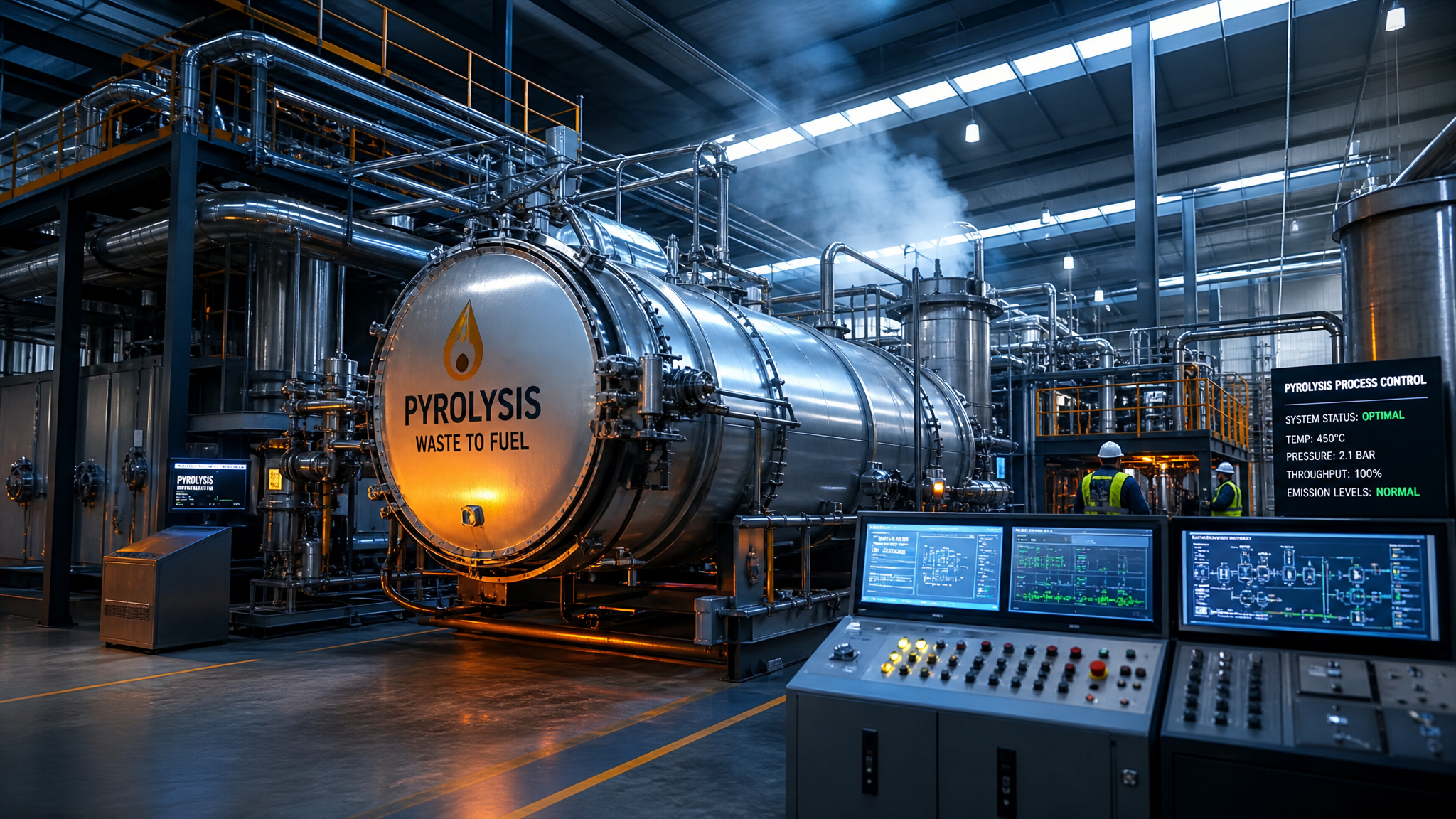
Pyrolysis Process Flow
Feedstock
Plastics, biomass, or organic waste prepared and dried
Heating
Thermal decomposition at 400-700°C in oxygen-free environment
Cracking
Long-chain polymers break into smaller hydrocarbon molecules
Condensation
Vapors cooled to produce liquid fuels and oils
Products
Naphtha, ethanol, jet fuel, syngas, and char
Gasification & Fischer-Tropsch
BioWatt power and fuel synthesis
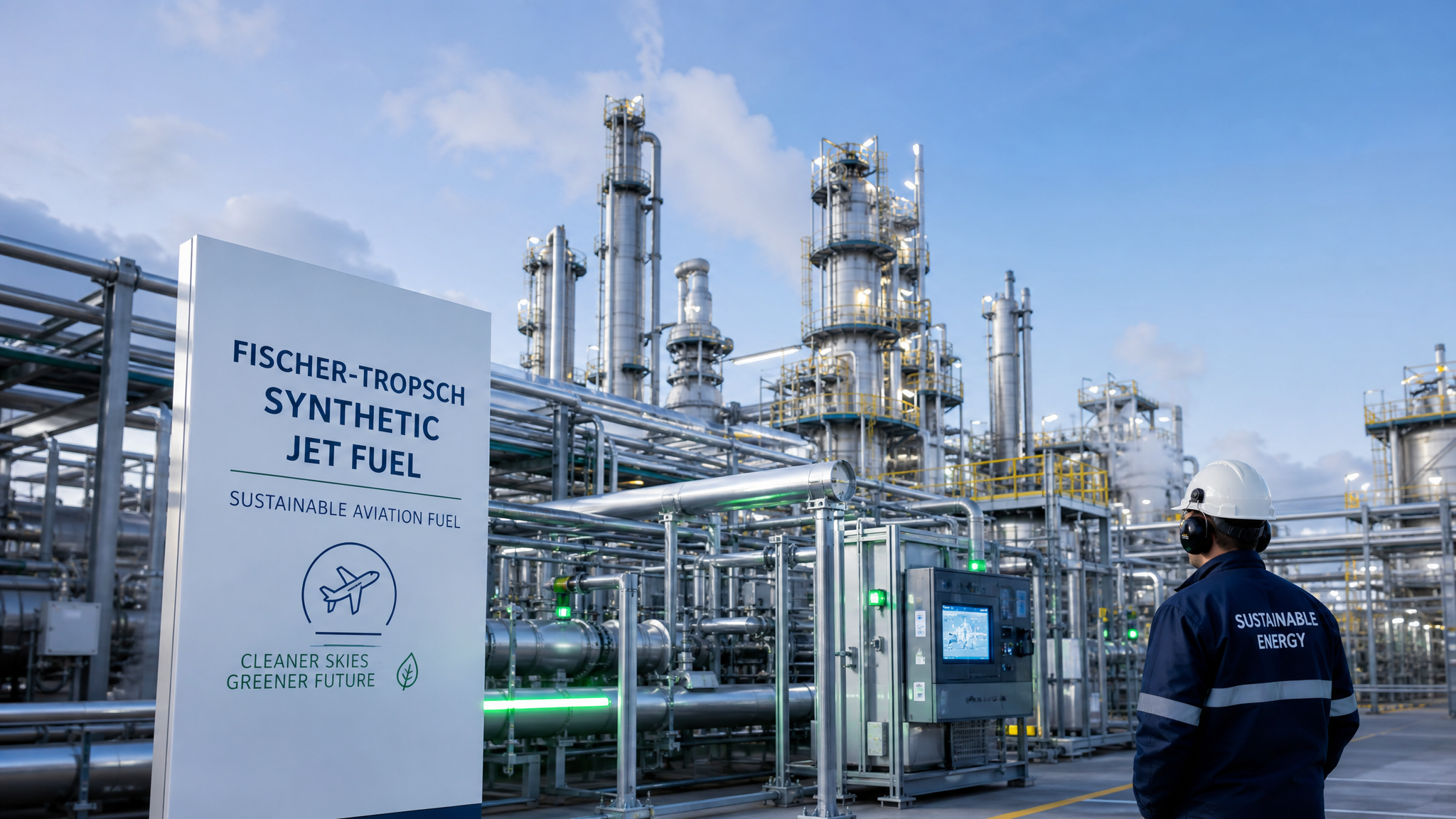
Gasification converts biomass and carbonaceous feedstocks into syngas through partial oxidation at high temperature. The resulting gas — mainly CO and H₂ — is cleaned and conditioned before use in synthesis or power systems.
The Fischer-Tropsch process reacts cleaned syngas over iron or cobalt catalysts to form long-chain hydrocarbons. These are then refined into diesel, naphtha, waxes, and jet-fuel blendstocks, enabling drop-in sustainable aviation fuel production.
Gasification Process Flow
Feedstock
Biomass, RDF, or MSW prepared for gasifier
Partial Oxidation
Controlled reaction at 700-1200°C produces syngas
Gas Cleaning
Removal of tars, sulfur, chlorine, and particulates
Conditioning
H₂/CO ratio adjustment for downstream synthesis
Conversion
Fischer-Tropsch or turbine for fuel/power output
Biochar & Activated Carbon
Carbon sequestration and purification
Biochar is produced by heating biomass in a low-oxygen environment. The resulting stable, carbon-rich solid improves water-holding capacity, nutrient retention, and soil structure, while providing long-term carbon sequestration.
Activated carbon is produced through further carbonization and activation (steam or chemical) to create extremely high internal surface area. It is the standard material for drinking water treatment, air filtration, VOC removal, and industrial purification.
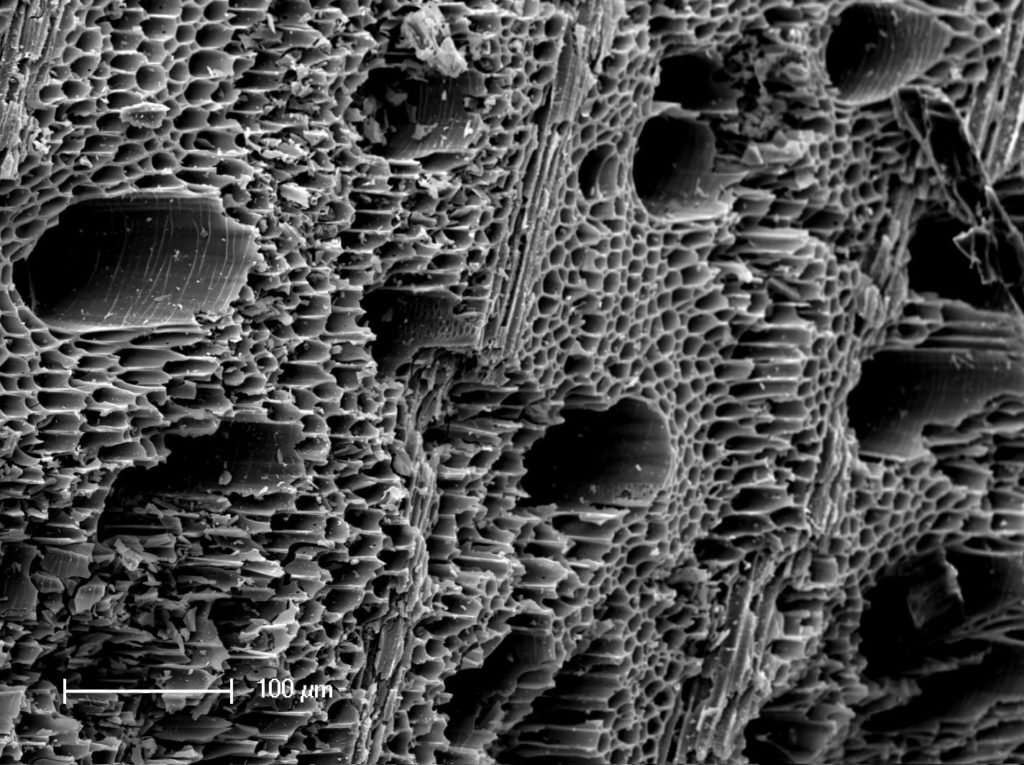
Biochar & Activated Carbon Production
Biomass Input
Agricultural residues, wood, or manure
Pyrolysis
Heating in low-oxygen conditions
Carbonization
Stable carbon-rich solid formation
Activation
Optional steam/chemical activation for activated carbon
Products
Biochar for soil, activated carbon for purification
Technical Specifications
Operating Temperature
400–1200°C
Variable across pyrolysis and gasification modes
Processing Capacity
Up to 200 t/day
Scalable modular reactor design
Liquid Yield
60–75%
Pyrolysis oil from plastic feedstock
Syngas Quality
>85% CO+H₂
After cleaning and conditioning